
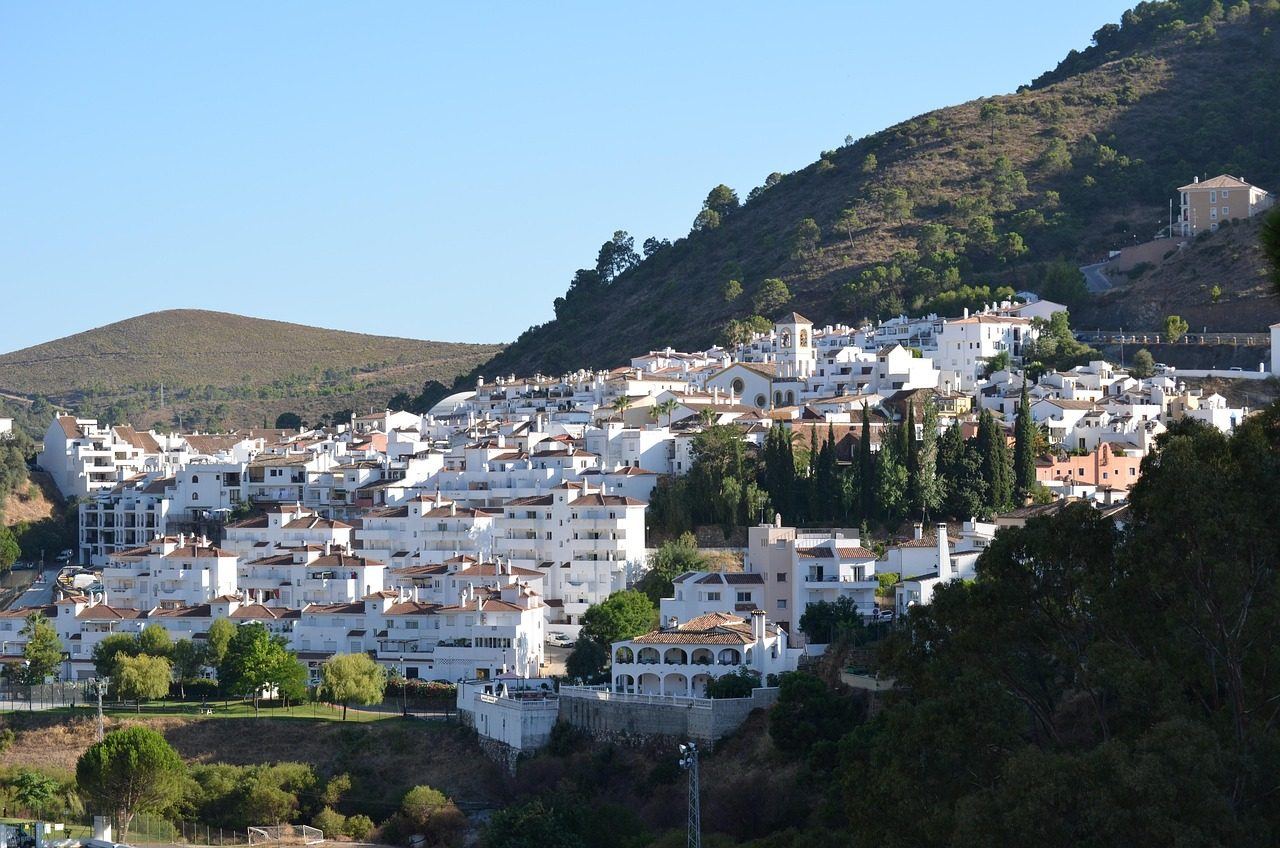
The Guadalhorce valley has quietly become one of the places couples choose when they want to marry somewhere that feels like the real Andalucía rather than a hotel ballroom. The countryside around Coín — the citrus and olive groves, the open views, the rural fincas set among the fields — is exactly the kind of setting a rural wedding is built on, and the town sits close enough to Málaga airport and the coast to be reachable for guests travelling from abroad. For an owner letting a property in or around the town, that creates a demand layer most inland hosts never think to chase: the wedding-guest block, where a single celebration at a finca in the surrounding countryside fills every self-catering property within easy reach for a long weekend. It is one of the most reliable and underused sources of multi-night bookings the valley produces.
This is not about hosting events yourself or turning a rental into a venue. It is about reading the demand that the countryside's own appeal for weddings and celebrations generates, and positioning a Coín property — a standalone finca or a village house in the casco histórico — to catch the guests who need somewhere to stay when the celebration is happening down the lane.
Why the countryside around Coín draws the celebration
The appeal is the same one that brings slow-tourism and harvest-season guests inland, only sharpened by an occasion. A couple planning a rural wedding wants the things the valley genuinely has: the open groves, the light, the sense of being somewhere rooted rather than packaged, and a backdrop that photographs as the Andalucía people imagine. The countryside around the town delivers that without the cost or the crowding of a coastal resort, and it sits within a manageable drive of the airport and the coastal hotels for guests who fly in.
What matters for an owner is that the celebration is rarely a self-contained affair held entirely on one site. A finca hosting a wedding in the surrounding countryside has limited beds of its own, so the wider party — extended family, friends travelling as couples, groups of guests sharing — spills outward into whatever self-catering accommodation sits within a short drive. That is where a well-positioned Coín property comes in. The town's stock of around 101 registered holiday lets is small enough that a property ready for this demand stands out rather than disappearing into a saturated coastal pile, and a single weekend event can absorb a meaningful share of that stock at once. Reading that overflow and being ready to serve it is the kind of demand-mapping that sits at the centre of how we approach inland management services.
The wedding block is a multi-night booking by nature
The single best thing about the wedding guest is how they stay. Nobody flies into Málaga for a Saturday celebration in the countryside and books one night. The pattern is a block — Friday to Sunday at the very least, and often longer, with guests arriving Thursday or Friday for the rehearsal and pre-wedding gatherings and staying through to Monday to recover and travel home. Many turn the trip into a short holiday in its own right, using the days either side to see the valley, the casco histórico, the Sunday market and the wider interior. A celebration that takes one afternoon routinely generates stays of three, four or five nights across the properties around it.
For an inland owner, that is precisely the booking shape the valley rewards. Longer stays mean fewer changeovers, lower turnover cost and a gentler operational load than a coastal unit churning three-night summer lets. The wedding block also tends to book well ahead — couples lock their date and their guests plan months out — which gives an owner the rare luxury of a confirmed multi-night booking on the calendar long before the season arrives. That kind of steady, planned-ahead, longer stay is exactly what an honest income picture for a Coín property should lean on, rather than a summer spike the town does not really have.
Larger parties and the operational reality of a cluster weekend
Wedding guests do not travel as lone visitors. They come as couples, as families, as groups of friends sharing a house, and that changes what a property needs to handle. A finca or a roomy village house that sleeps a larger party is far more useful to this demand than a one-bedroom unit, because guests want to stay together — siblings under one roof, a group of university friends in a shared house, parents with children in the next room. A property set up to take a party of six or eight cleanly, with the beds, the bathrooms and the living space to match, is the one that gets booked when the block goes out.
The harder part is what happens when several properties around one celebration all fill for the same weekend. A single event can mean a cluster of bookings checking in within hours of each other on the Friday and out together on the Sunday or Monday, which compresses every operational task into the same narrow window. Turnaround has to be tight and reliable, key handover has to work for several arrivals landing close together — often late, often jet-lagged, often after a long drive from the airport — and someone has to be reachable when a guest cannot find the gate in the dark. This is the part of the wedding-block opportunity that quietly defeats absentee owners, and it is the part that a hands-on, in-person operation is built for. Coordinating several properties around one weekend, with check-in handled in person at each, is ordinary work for us and a genuine headache for an owner doing it alone from another country.
Why standalone fincas and casco village houses suit this demand
The two property types the valley does best both serve the wedding guest particularly well, for different reasons. A standalone finca in the surrounding countryside gives a larger party the privacy, the space and the setting to gather — somewhere a group can spread out, sit outside in the evening, and feel they are part of the same rural world the celebration is happening in. For guests who want to stay close to the event and close to each other, a finca that sleeps the whole group is close to ideal, and it is the kind of property the wedding party will return to year after year as friends marry in the same valley.
A village house in the casco histórico serves the other half of the demand. Plenty of wedding guests prefer to be in the town itself — walking distance to the plazas, the Plaza Alameda, somewhere to find a coffee in the morning and dinner at night without driving, and a base that doubles as a proper introduction to Coín for visitors who have never been. A well-kept house in the old town gives couples and smaller groups exactly that, and it positions the property to catch not just wedding overflow but the slow-tourism and market-day guest the rest of the year. Both property types share the same foundation: they have to be genuinely lettable before any of this works, which means the rural-property realities — the DAFO and regularisation questions that attach to fincas in this valley, the water and access matters — are settled, and the licensing is properly in place. Getting that foundation right is what turns a charming property into one that can actually take a wedding block without trouble.
Building the wedding block into a Coín calendar
The wedding-guest demand is not a replacement for the valley's other strengths; it is a complement to them, and it lands at a useful time of year. The popular window for rural celebrations runs through the warmer, drier months and into the shoulder seasons, filling weekends that might otherwise sit quiet between the deeper off-season and the modest inland summer. An owner who understands that the property's job some weekends is to be the calm, well-run base for a celebration happening nearby — rather than the destination itself — reaches a guest who books early, stays for several nights, comes in a paying group, and treats the place with the care of people on a happy occasion.
The judgement that makes it work is the same one that underlies all good inland letting: reading the property honestly against the guest it can actually serve, and against the valley's own calendar rather than the coast's. A finca positioned to take a wedding party, or a casco house pitched at the guest who wants to walk to the plazas, is a clear proposition that the right visitor recognises immediately. That clarity, paired with the operational discipline to handle a cluster of arrivals over one compressed weekend, is what turns the wedding block from a chaotic scramble into one of the steadiest and most rewarding sources of multi-night bookings an inland owner has. Understanding who the property is for is the foundation of running it well, which is why it sits at the heart of how we work with owners through every part of the process.
If you own a property in or around Coín and want to understand whether it suits the rural-wedding and event-weekend guest — and how to handle the turnaround when a celebration nearby fills the whole calendar at once — we know this valley and its market. Get in touch through our owners' page and we will give you an honest, specific read.